
On this page
Head & Neck Tumours / Cancer
Overview
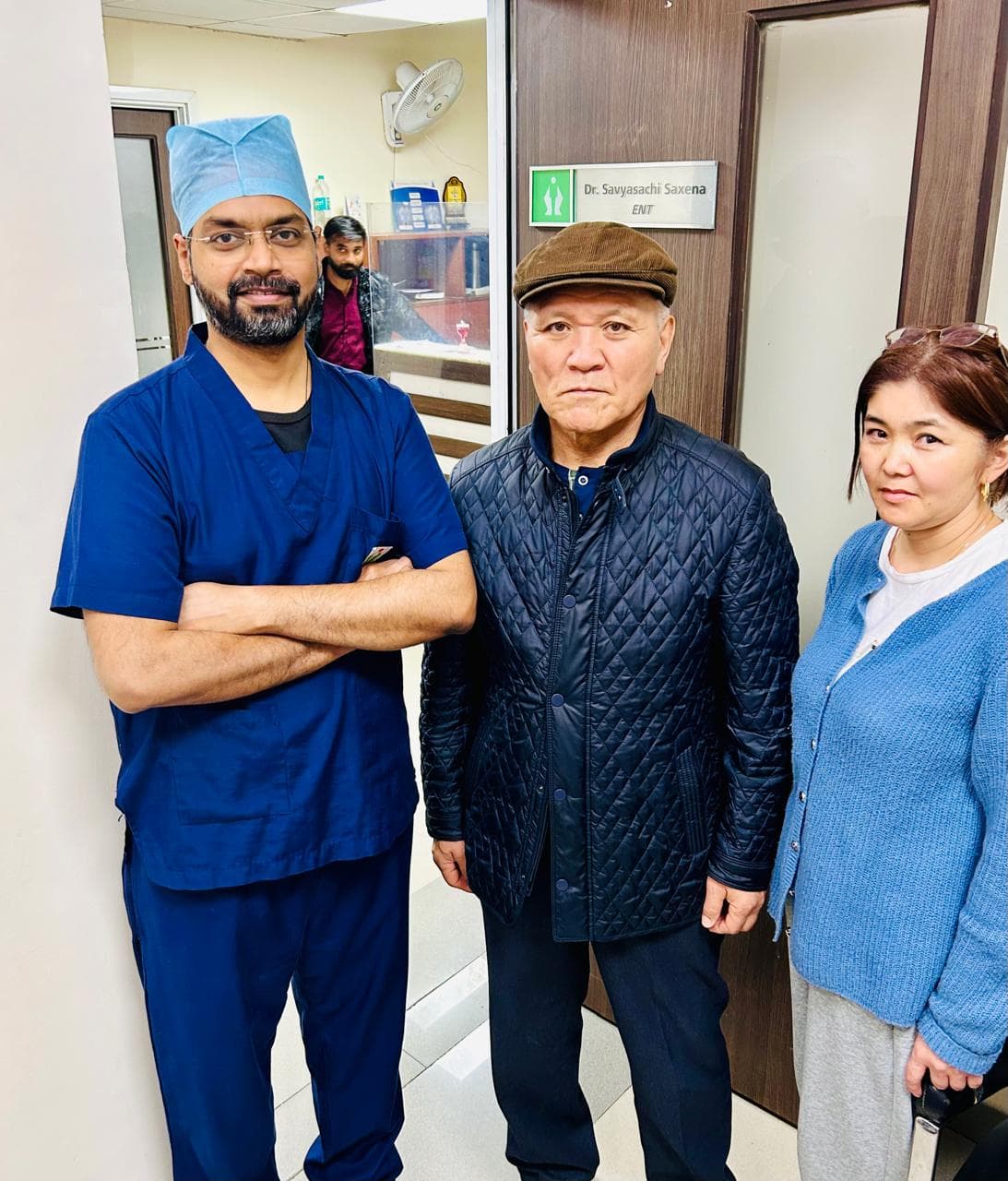
Head and neck tumours include growths of the mouth, tongue, throat, voice box, nose and sinuses, salivary glands and thyroid, as well as lumps in the neck. Many are benign, but head and neck cancers are among the more common cancers in India, largely because of tobacco — smoked or chewed — areca nut and alcohol.
Finding a cancer early makes a real difference: small tumours can often be treated with less extensive surgery, and outcomes are generally better. That is why Dr. Savyasachi Saxena encourages early examination of any non-healing mouth ulcer, persistent hoarseness or new neck lump, and offers focused cancer-detection check-ups for people at risk.
When a tumour is found, treatment is planned around its type, location and stage, often with medical and radiation oncologists, pathologists and radiologists. Dr. Saxena performs head and neck surgery ranging from removal of precancerous tissue to thyroidectomy, parotidectomy, glossectomy, laryngectomy and neck dissection, with speech, swallowing and appearance considered from the start.

Your specialist
Dr. Savyasachi Saxena, MBBS, MS (ENT)
ENT & Head-Neck Surgeon · HOD, Fortis Hospital, Noida
What we treat
Conditions treated
Mouth and tongue cancer
Often begins as a non-healing ulcer, a white or red patch, or a lump, and is commonly linked to tobacco, areca nut and alcohol.
Precancerous lesions
Leukoplakia, erythroplakia and oral submucous fibrosis can progress to cancer. Removing or monitoring them, and stopping tobacco, lowers the risk.
Throat and voice box cancer
Can cause persistent hoarseness, difficulty swallowing, ear pain on one side or a neck lump.
Thyroid nodules and goitre
Most thyroid nodules are benign. Surgery is considered for suspicious or cancerous nodules, and for large goitres that press on the windpipe or food pipe.
Salivary gland tumours
Most parotid tumours are benign, but they tend to grow slowly over time and are usually removed.
Neck lumps
Enlarged lymph nodes, cysts and other swellings. In adults, a lump that persists for more than two weeks needs evaluation.
Nose, sinus and skull base tumours
Growths of the nose, sinuses and the area around the eye socket, which may need endoscopic surgery or open procedures such as maxillectomy.
Signs & symptoms
Symptoms to watch for
Any of these, especially if they last or keep coming back, are worth discussing with an ENT specialist.
- A mouth ulcer, patch or lump that doesn't heal within two weeks
- A lump in the neck that persists
- Hoarseness lasting more than three weeks
- Pain or difficulty swallowing, or a feeling of food sticking
- Ear pain on one side without an ear problem
- Blood in saliva or phlegm
- Swelling in front of the ear or under the jaw
- Reduced mouth opening, loose teeth, or numbness of the tongue or lip
- A blocked nose with bleeding on one side, or swelling of the cheek
Diagnosis
How it's diagnosed
Tests are chosen for your symptoms — not everyone needs all of them.
- 1
Clinical and endoscopic examination
A thorough examination of the mouth, throat, larynx, nose and neck, including endoscopy, to map any abnormality.
- 2
Biopsy and FNAC
A tissue sample confirms the diagnosis. For neck and thyroid lumps, fine needle aspiration (FNAC), often guided by ultrasound, is usually the first step.
- 3
Imaging
Ultrasound, CT, MRI or PET-CT to understand the size and spread of disease and to plan treatment.
- 4
Thyroid evaluation
Thyroid function blood tests, ultrasound and FNAC to classify thyroid nodules.
- 5
Staging and team planning
Results are brought together to stage the disease, so that surgery, radiotherapy and chemotherapy can be combined in the right order.
Treatment
Treatment options
Treatment is tailored to the cause and severity of your problem. Where they are appropriate, non-surgical options are considered first.
- Surgical
Excision of precancerous lesions
Complete removal of leukoplakia or suspicious patches so that the whole lesion can be examined.
- Surgical
Glossectomy and oral cancer surgery
Removal of tongue and mouth cancers with a margin of healthy tissue, such as hemiglossectomy, with reconstruction where needed.
- Surgical
Thyroidectomy
Removal of half (hemithyroidectomy) or all of the thyroid gland, with careful protection of the nerves to the voice box and of the parathyroid glands.
- Surgical
Parotidectomy and salivary gland surgery
Removal of parotid or submandibular gland tumours, identifying and preserving the facial nerve whenever possible.
- Surgical
Laryngectomy and pharyngectomy
Partial or total removal of the voice box or part of the throat for cancer, with voice and swallowing rehabilitation planned.
- Surgical
Neck dissection
Removal of lymph nodes from the neck — radical, modified radical or selective — to treat or stage cancer that may have spread.
- Surgical
Maxillectomy and sinonasal tumour surgery
Removal of tumours of the upper jaw, nose and sinuses, sometimes combined with endoscopic techniques, and in advanced cases involving the eye socket, orbital exenteration.
All procedures offered
- Cancer Detection Clinics
- Pre-cancerous Tissue Excision
- Hemiglossectomy & Laryngectomy
- Pharyngectomy & Thyroidectomy
- Maxillectomy & Orbital Exenteration
- Frontoethmoidectomy
- Parotidectomy
- Neck Dissection (Radical, Modified, Selective)
After treatment
Recovery & aftercare
- 1
Hospital stay depends on the operation: a thyroidectomy usually needs a short stay, while major cancer surgery with reconstruction needs longer inpatient care.
- 2
A drain may be placed in the neck for a day or two, and stitches or clips are removed at follow-up.
- 3
Speech and swallowing therapy, nutrition support and shoulder physiotherapy after neck dissection are important parts of recovery.
- 4
After thyroid surgery, calcium levels are monitored, and thyroid hormone tablets are needed lifelong if the whole gland is removed.
- 5
Regular follow-up after cancer treatment helps detect any recurrence early. Stopping tobacco and alcohol improves healing and lowers the risk of a new cancer.
Safety
Possible risks
- Bleeding, infection or wound problems
- Voice change after thyroid or laryngeal surgery
- Low calcium after thyroidectomy, usually temporary
- Facial nerve weakness after parotid surgery, usually temporary
- Shoulder stiffness or numbness after neck dissection
- Changes in speech, swallowing or appearance after major cancer surgery, which rehabilitation aims to reduce
Every procedure carries some risk. Dr. Saxena explains the risks that apply to you, and the alternatives, before you decide on any treatment.
Getting help
When to see an ENT specialist
Book a consultation if
- Any mouth ulcer, white or red patch, or lump lasting more than two weeks
- A neck lump present for more than two weeks
- Hoarseness for more than three weeks
- A swelling in the thyroid area or in front of the ear
- If you use or have used tobacco, areca nut or alcohol regularly, a periodic mouth and throat check is worthwhile
Get urgent care if
- Breathing difficulty or noisy breathing
- Being unable to swallow liquids or saliva
- Bleeding from the mouth or throat
- A rapidly enlarging neck or thyroid swelling
In an emergency, call 112 or go to the nearest hospital emergency department.
FAQs
Frequently asked questions
Is every neck lump cancer?
No. Many neck lumps are lymph nodes enlarged by an infection, benign cysts or thyroid nodules. However, a lump that lasts more than two weeks, keeps growing, or comes with hoarseness, swallowing difficulty or weight loss should be examined, and may need an ultrasound and a needle test.
Can oral cancer be treated successfully?
Oral cancer found at an early stage can often be treated with surgery alone, and results are generally much better than when it is found late. That is why a non-healing ulcer or patch should never be ignored. Your specialist will explain the stage and treatment options in detail.
Will my voice change after thyroid surgery?
Most people's voice is unaffected. Temporary hoarseness or voice fatigue can occur, and permanent voice change is uncommon. The nerves that control the vocal cords are identified and protected during the operation.
Will I need tablets after a thyroidectomy?
If the whole thyroid is removed, lifelong thyroid hormone replacement is needed, usually as one tablet a day. After removal of half the gland, many people don't need tablets, but thyroid levels are checked at follow-up.
Does a benign parotid tumour need surgery?
Usually, yes. Most benign parotid tumours keep growing slowly, and a small number can change over many years, so removal is generally recommended. Surgery is planned to protect the facial nerve, which runs through the gland.
What happens at a cancer detection check-up?
It is a focused examination of the mouth, throat, larynx and neck — with endoscopy, and a biopsy if something looks abnormal — for people with symptoms or risk factors such as tobacco or alcohol use. Finding precancer or early cancer allows simpler treatment.
Further reading
This page gives general information for patients and is not a substitute for a medical consultation. Diagnosis and treatment depend on an individual examination.